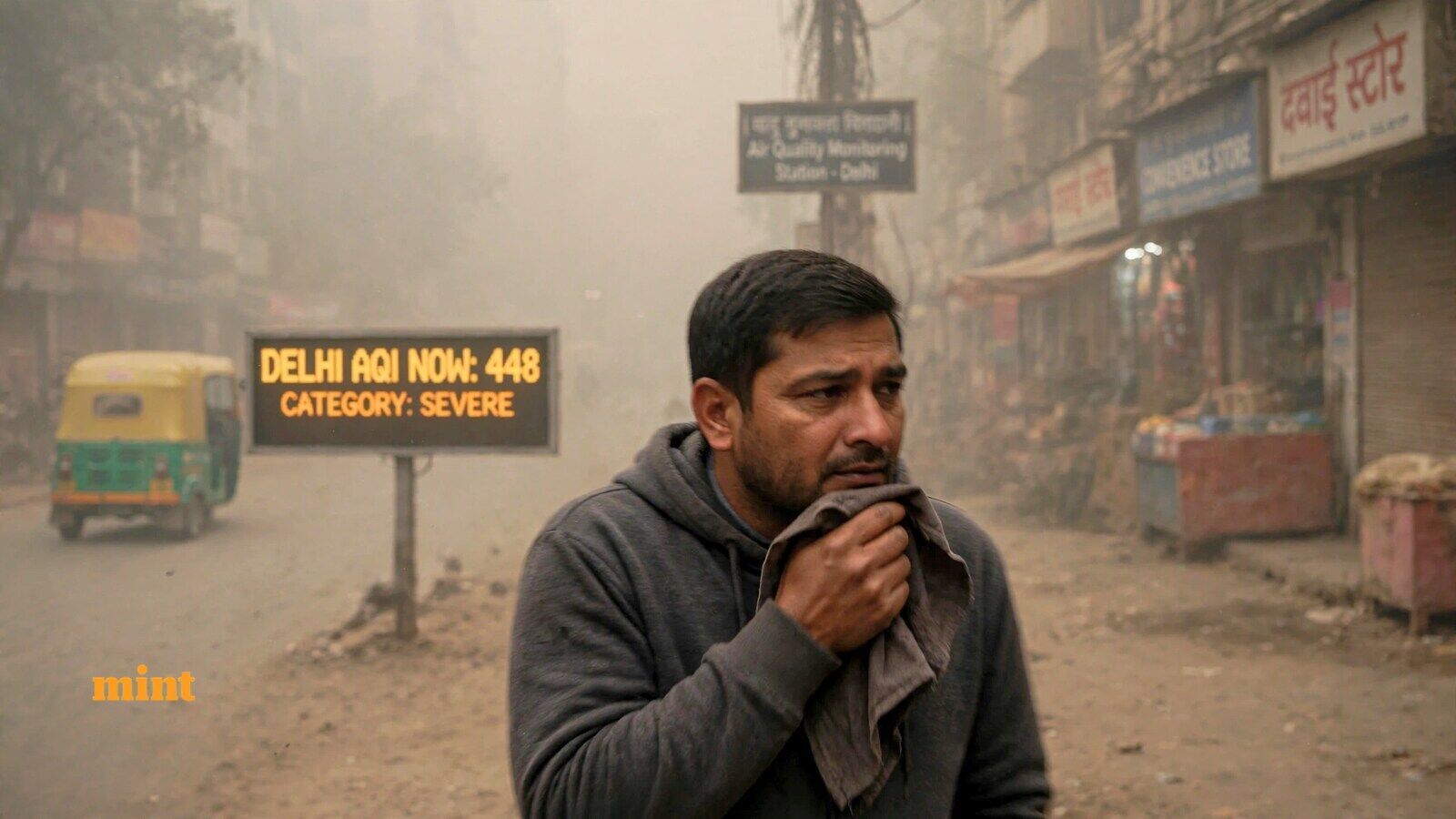
Delhi's Air Quality Index stood at 448 on the morning of Saturday, November 21, according to live data updated on AQI.in at 7:21 AM, as the capital remained in the grip of severe smog. The temperature was 17°C and humidity 66%. PM2.5 concentration was 297 micrograms per cubic metre, while PM10 stood at 416 micrograms per cubic metre; a separate PM10 monitoring page reported 411 micrograms per cubic metre, classifying the level as severe and unsafe and noting it was 9.1 times the WHO guideline of 45 micrograms per cubic metre. Carbon monoxide was 3,131 parts per billion, nitrogen dioxide 24 ppb, sulphur dioxide 7 ppb and ozone 2 ppb.
Air quality fluctuated sharply over the previous 24 hours. The AQI reached 536 on Friday at 8:31 AM and declined through the afternoon to a low of 198 at 3:31 PM, before rising again in the evening and returning to hazardous levels by Saturday morning. Historical November data also shows repeated spikes, with the AQI reaching 666 on November 9 and 547 on November 12. Friday's average daily reading was 341, and the November 2026 average of 404 is the worst ever recorded, according to the report.
The AQI.in dashboard compared Delhi's air exposure to smoking 11 cigarettes daily, translating to 77 cigarettes weekly and 330 monthly, an estimate it says assumes continuous exposure to average PM2.5 concentrations. Residents were advised to stay indoors and use air purifiers, and the dashboard also recommended N95 masks and car filters.
Hisar topped India's live pollution rankings with an AQI of 556, followed by Rohtak at 521, Sri Ganganagar at 494, Bhiwani at 493, Sonipat at 463 and Sirsa at 460. New Delhi ranked seventh at 449, followed by Srinagar at 431, Faridabad at 417 and Bathinda at 416, with all ten cities classified under hazardous air quality. Among major metropolitan cities, Chennai recorded 265, Bengaluru 236, Pune 193, Mumbai 188, Ahmedabad 177, Hyderabad 156 and Kolkata 84, leaving Delhi the most polluted metropolitan city in the comparison.